
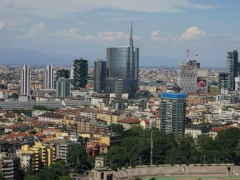

MILAN — MILAN (AP) — Milan has added the title of Olympic city to its long-held monikers as Italy’s fashion and finance capital, a legacy that crowns two decades of growth that reshaped the skyline and boosted investment, tourism and cultural life.
The legacy of the Milan Cortina Winter Games is both physical, in new facilities and infrastructure, and intangible, burnishing Milan’s global image. It’s the second major event to leave a lasting mark on the city, after the Expo 2015 world’s fair brought new investment, tourists and talent.
“Milan is more and more creating a distinctive brand able to attract an international audience,’’ said Dino Ruta, who is heading up a Bocconi University study on the Olympics’ economic impact for the International Olympic Committee, expected later this year.
The physical legacy of the Milan Cortina Olympics is relatively slight, by design. The Games were spread out over seven city, valley and mountain venues hundreds of kilometers apart to leverage existing facilities, saving on new construction.
Milan inherits the brand new Santgiulia arena, which hosted Olympic hockey and will be used for concerts, exhibition and sporting events, while the athletes’ Olympic Village will be turned into housing for 1,700 students, badly needed in a city with 10 universities and an affordable housing crisis.
Preliminary data gathered for the Bocconi study shows that about 4 billion euros ($4.7 billion) were invested in the Games, including for new and upgraded sports facilities, transportation investments on roads, metro accessibility, railways and ski lifts, energy costs and the administration of the Games, Ruta said.
In Milan, the Games cost 735 million euros ($867 million) to host 90 indoor ice events and the opening ceremony at San Siro, while visitors were on course to spend around 1 billion euros ($1.2 billion), according to a Feb. 16 report by the Assolombarda business association. The Olympics are forecast to boost 2026 economic growth in Milan by 0.6 percentage points to 1.7%, accelerating industrial output in the entire region, the association said during the Games.
Milan’s transformation from a provincial city known primarily as an industrial and business center began in the early 2000s, when a wave of redevelopment projects started reshap