

WASHINGTON — Inflation likely was elevated last month even before the spike in oil and gas prices of the past two weeks that is expected to send consumer costs soaring in the months ahead.
Consumer prices are forecast to have risen 2.5% in February from a year earlier when the Labor Department reports inflation figures Wednesday, according to a survey of economists by data provider FactSet. That would be up slightly from 2.4% in the previous month. Core prices, which exclude the volatile food and energy categories, are expected to have also risen 2.5% in February, matching January’s figure for the lowest in five years.
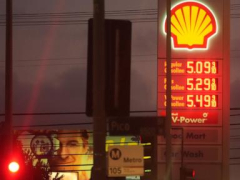
But the data will represent an already-faded snapshot of inflation before the U.S. and Israel attacked Iran on Feb. 28, which has caused wild gyrations in oil prices as shipping lanes through the Persian Gulf have suffered a rare shutdown. Gas prices have already jumped and are expected to push inflation much higher when inflation data for this month is released in early April.
The price spike will challenge officials at the Federal Reserve and could slow consumer spending, which drive two thirds of the nation’s economic growth each year. The increase could be a one-time event and potentially reverse if the war ends soon, as President Donald Trump has hinted. But the spike in gas prices threatens to worsen inflation for at least a few months with Americans already worn down by nearly five years of stubbornly high prices. “Affordability” is already a thorny political issue for congressional Republicans who will face voters in midterm elections later this year.
Oil prices soared as high as nearly $120 a barrel late Sunday before falling closer to $85 by Wednesday after Trump suggested that the conflict would be a “short-term excursion.” Still, he has also threatened ongoing attacks and it isn’t clear when the conflict might end.
Some analysts warn prices will move much higher if the Strait of Hormuz remains closed, which has removed roughly three-quarters of the Persian Gulf region’s oil production from world markets, according to Wood Mackenzie, an energy analytics firm. On Wednesday, a projectile hit a Thai cargo ship off the coast of Oman in the Strait of Hormuz, setting it ablaze.
Iran is also targeting oil fields and refineries in Gulf Arab nations, aiming at generating enough global economic pain to pressure the United States and Israel to end their strikes.
Oil prices could soar to $150 a barrel in the coming weeks, the firm forecasts, if shipments don’t resume.
That would push gas prices still higher in the United States, where they jumped to $3.58 a gallon on average nationwide Wednesday, according to AAA, an increase of about 20% just in one month.
Higher oil prices will lift other costs as we