

WASHINGTON — President Donald Trump announced a $12 billion farm aid package Monday — a boost to farmers who have struggled to sell their crops while getting hit by rising costs after the president raised tariffs on China as part of a broader trade war.
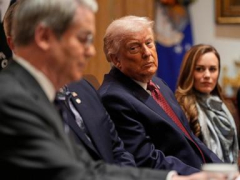
He unveiled the plan Monday afternoon at a White House roundtable with Agriculture Secretary Brooke Rollins, lawmakers from farm states, and farmers who thanked him for the help.
“With this bridge payment, we’ll be able to farm another year,” Iowa farmer Cordt Holub told Trump during the event.
Rollins put the immediate value of the program at $11 billion — money that the White House said will offer one-time payments to row-crop farmers. Another $1 billion will be put aside for specialty crops as the administration works to better understand the circumstances for those farmers, Rollins said. The aid will move by the end of February, she said.
“We looked at how they were hurt, to what extent they were hurt,” Trump said, explaining how the administration came up with the size of the package. Trump said the money for the program will come from tariff revenue.
Later this month, the USDA will use a formula that estimates production costs to come up with a per-acre payment for each type of crop. Payments will be capped at $155,000 per farm or person, and only entities that make less than $900,000 a year will be eligible for aid. That will limit payments to large farms, which was a criticism of farm aid Trump delivered in his first term.
Farmers have backed Trump politically, but his aggressive trade policies and frequently changing tariff rates have come under increasing scrutiny because of the impact on the agricultural sector and because of broader consumer worries.
The aid is the administration’s latest effort to defend Trump’s economic stewardship and answer voter angst about rising costs. Trump has been dismissive of the affordability issue at times, but on Tuesday, he is set to travel to Pennsylvania to talk about how his administration is trying to address a concern that is important for voters.
Soybeans and sorghum were hit the hardest by Trump’s trade dispute with China because more than half those crops are exported each year with most of the harvest going to China.
In October, after Trump met Chinese leader Xi Jinping in South Korea, the White House said Beijing had promised to buy at least 12 million metric tons of U.S. soybeans by the end of the calendar year, plus 25 million metric tons a year in each of the next three years. China is the world’s largest buyer of soybeans, but in recent years