
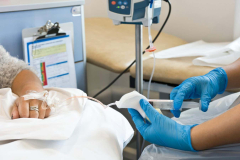


We already know that timing chemotherapy correctly can minimise side effects
Paul Springett/Alamy
They say timing is everything, and treating cancer may be no exception. Researchers have found that simply shifting when people with cancer receive immunotherapy drugs could improve their survival, adding to evidence that our body’s internal clocks influence how well cancer treatments work.
The activity of our cells and tissues works on 24-hour cycles, known as circadian rhythms, which coordinate everything from hormone release to the timing of cell division and repair. These rhythms are often disrupted in cancer cells, which tend to divide continuously, rather than at set times.
This has prompted efforts to reduce the side effects of chemotherapy, which targets rapidly dividing cells, by administering it when healthy tissues are least active. Increasingly, however, researchers are exploring whether the effectiveness of cancer drugs might also be improved by giving them at particular times.
One such group of drugs is immune checkpoint inhibitors, which help immune T-cells recognise and attack tumours more effectively. “T-cells and other immune defenders are naturally more active in the morning; primed to respond,” says Seline Ismail-Sutton at Ysbyty Gwynedd hospital in Bangor, UK, who wasn’t involved in the study. “Administering immune checkpoint inhibitors during this window may amplify anti-tumour effects and enhance efficacy.”
Earlier this year, Zhe Huang at Central South University in Changsha, China, and his colleagues reported that giving the checkpoint inhibitor pembrolizumab alongside chemotherapy to people with advanced non-small cell lung cancer (NSCLC) before 11.30am was associated with nearly double the survival rate seen in those who received most of their treatment in the afternoon.
To investigate whether timing treatments around circadian rhythms – known as chronotherapy – might also benefit people with small cell lung cancer, a faster-growing and more aggressive form of the condition, the same team analysed data from 397 people treated with