
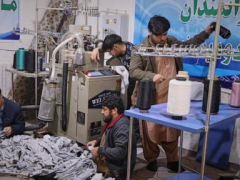

HERAT, Afghanistan — In a tiny room in the center of Herat, Afghanistan’s westernmost city, Shahabuddin uses his hands to propel himself along the floor to a freshly-made pile of socks waiting to be sorted and packaged.
A double amputee since a roadside bomb took both his legs a decade ago, when Afghanistan was mired in conflict between U.S.-led forces and Taliban insurgents, the 36-year-old father of four had struggled to find work. Unemployed for the last decade, he had been forced to rely on relatives for his family’s survival.
But a new sock production workshop in Herat employing only disabled workers has given him new hope.
“I became disabled due to the explosion. Both my legs were amputated,” Shahabuddin, who like many Afghans goes by only one name, said during a brief pause in his work in early December. “Now I work here in a sock factory, and I am very happy that I have been given a job here.”
The workshop is the brainchild of Mohammad Amiri, 35, a former grocery shop worker who started the business about a month ago. Amiri, himself disabled by childhood polio, wanted to create jobs and help provide income for other people with disabilities, particularly as many of them were injured during the conflict and have no other means of income.
He teamed up with another polio survivor to start the sock factory with a workforce of men disabled either through traumatic injuries or because of congenital issues or other reasons. They make four types of socks: lon