

Adina Campbell,UK correspondent,
Lewis Adamsand
Kathryn Armstrong
PA Media
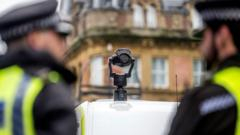
Facial recognition technology could be used by all UK police forces in more situations under plan announced by the Home Office.
It hopes a 10-week public consultation will also pave the way for the technology to be used more often while striking a balance with protecting people’s privacy.
Facial recognition has been used by eight police forces in England and Wales to find wanted suspects and vulnerable people, as well as monitoring live events, since 2017.
Officials say the technology is needed to help catch serious offenders. But rights groups worry the technology is too invasive and may have racial biases.
Policing and crime minister Sarah Jones said that, though there were “legitimate concerns” about the technology, she believed a wider roll-out could mark “the biggest breakthrough” in catching criminals since DNA analysis.
The public consultation could lead to new legislation on how and when police could use facial recognition technology. Currently, they can use three types for specific purposes.
The Home Office says that while there is a legal framework for police to use facial recognition technology, this “does not give the police sufficient confidence to use it at significantly greater scale”.
It has not made clear what situations it was considering expanding facial recognition use into – but these may include locating illegal migrants on the run.
Officials believe the technology could also help to identify and arrest prisoners released by mistake, and would only be used in time-limited, focused deployments.
Any new laws informed by the consultation would take about two years to be passed by Parliament, the Home Office said.
They would primarily affect police forces in England and Wales, but would also be relevant to certain powers in Scotland and Northern Ireland.
One of the proposals the government is seeking public opinion on is the creation of a regulator overseeing police use of biometrics and facial recognition.
The public consultation involves an online survey, which can be accessed on the government website. Alternatively, people can email or write to the
Read More