
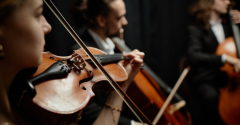

In October 2021, the Beethoven Orchestra Bonn interpreted the first movement of Beethoven’s 10th unfinished symphony, which was completed with the use of artificial intelligence.
A team of computer scientists, music historians, musicologists, and composers developed the ‘Beethoven AI’ to analyze Beethoven’s music style and life, using the sketches he left behind of the 10th symphony, plus works from other composers that had a notable influence on his life, such as Johann Sebastian Bach, to generate pieces that reflect what he would have composed.
Beethoven AI, as others AI composition programs, produces music in the same way ChatGPT produces outcomes. It uses machine learning and algorithms to analyse musical data and patterns, and generative models to produce music based on inputted prompts.
Hence, the AI tool was trained by the team of experts and provided with all the necessary information for it to understand, be contextualized, and finally, be able to create something that Beethoven himself could have written.
This milestone raises an important question that becomes more relevant day by day: as technology becomes increasingly capable of initiating creativity, what remains distinctly human in the classical music world?
Can AI replace the sensitivity and humanity needed to compose, interpret, convey the emotions, or communicate the composer’s intended message?
Classical Music Evolution
Classical music has historically been a niche domain. It was born in the house of Jesus as the natural successor after choral music.
Whatsoever, only the most privileged ones, those of noble background or family with ties to music, could dedicate their lives to the study of an instrument or composition, and only those part of the aristocracy had the privilege to enjoy it.
Over time and thanks to globalization and the massive spread of information, classical music has expanded, allowing millions of people around the world to be delighted by it.
Digital platforms like Spotify and YouTube offe