
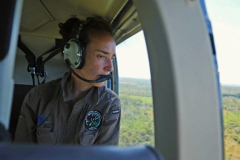

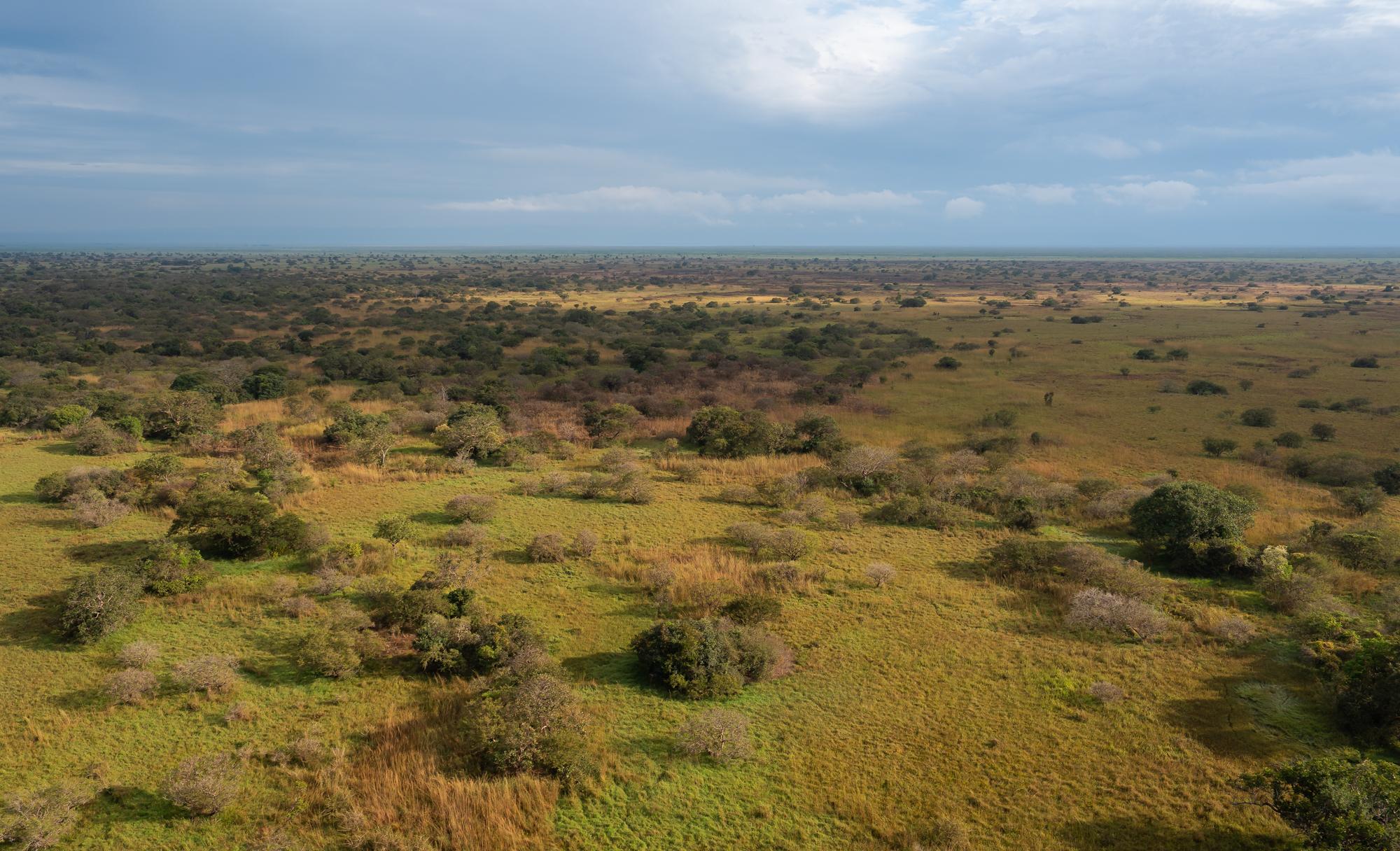
- In 2017, Upemba National Park in the Democratic Republic of Congo was largely a “paper park,” badly underfunded and encroached on by poachers, farmers, artisanal miners and armed groups, with its wildlife in steep decline.
- That year, Forgotten Parks signed a 15-year deal with the DRC government to manage the park.
- The agreement was one of a growing number of public-private partnerships for conservation in Africa.
- Mongabay spoke to Forgotten Parks’ DRC director, Christine Lain, about how Forgotten Parks approaches its work at Upemba.
In the early 2010s, Upemba National Park in the southern Democratic Republic of Congo was a case study in the dysfunction of some protected areas in Africa. Park rangers and staff were regularly harassed or killed by armed militias embroiled in the region’s long-running conflicts, and wildlife numbers had declined sharply as a result of widespread poaching. After years of fighting and neglect, by 2012 Upemba was in what one conservationist described as a “pitiful state.”
In 2016, Robert Muir, a program director with the Frankfurt Zoological Society (FZS), founded Forgotten Parks. FZS had been working with the ICCN, the DRC government institute in charge of the country’s protected areas, on a management strategy for Upemba. But after the park’s chief warden was killed in an ambush in late 2012, FZS pulled out. Muir and Forgotten Parks offered to step in, and in 2017 they signed a 15-year deal with the DRC government to run Upemba directly.
The deal was part of a wider trend of public-private partnerships (PPPs) for conservation in protected areas in Africa. In parks where governments are either unwilling or unable to manage day-to-day operations on their own, many have turned to foreign NGOs like Forgotten Parks and the higher-profile African Parks to help. According to a 2024 study published in PNAS, there are now more than 127 protected areas in 16 countries that are managed under this arrangement.
Mongabay’s Ashoka Mukpo spoke with Christine Lain, the DRC director of Forgotten Parks and current manager of Upemba, about its PPP at Upemba. Lain left a career in humanitarian aid to work with the IUCN, the global wildlife conservation authority, where she spent 12 years before joining Forgotten Parks in 2021.
Mongabay: What do you see as the main challenges for Upemba in terms of the integrity of its ecosystems?
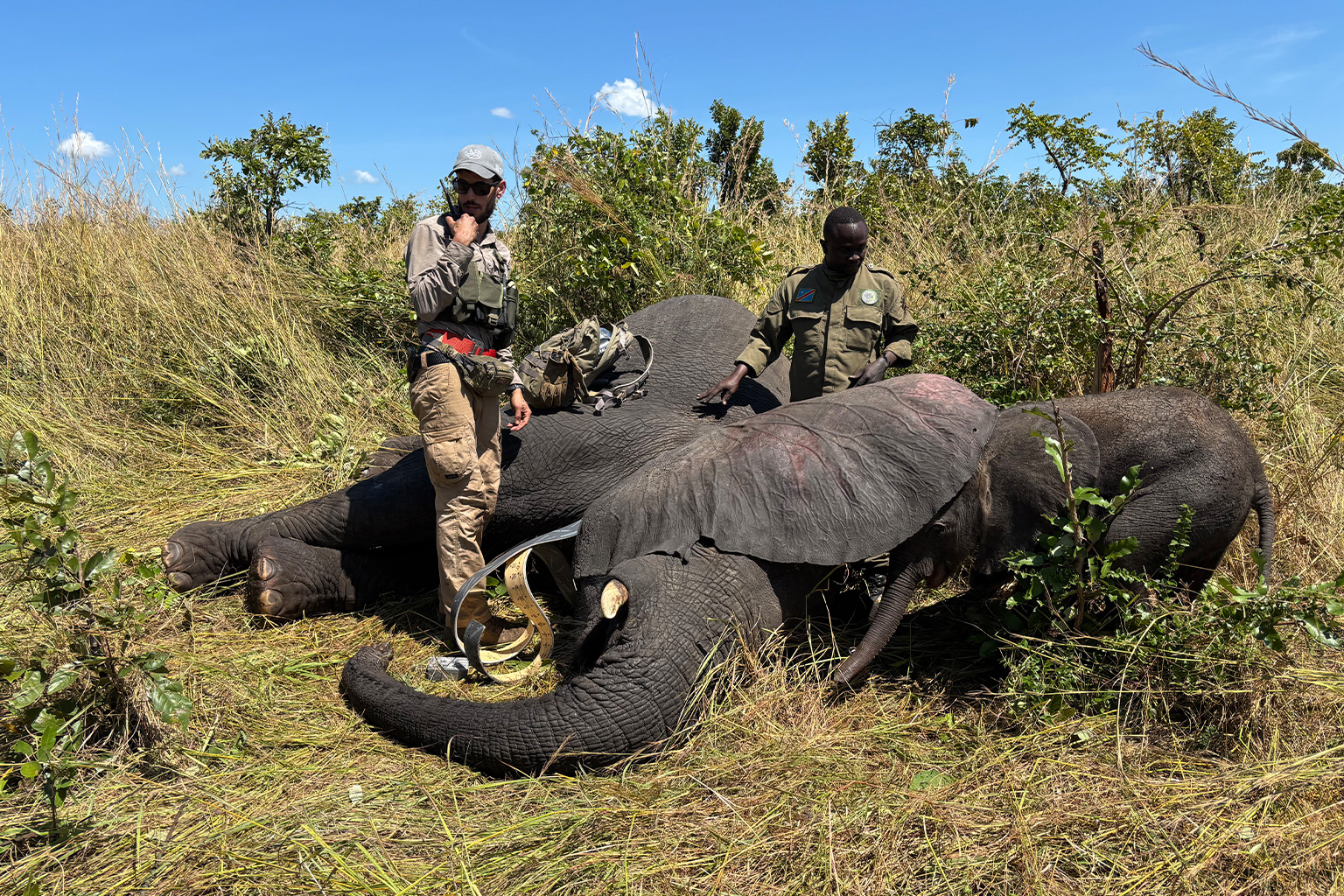
Christine Lain: The main challenge has been bushmeat. Poaching has been a big challenge. During the Second Congo War, it was nearly industrial poaching. You had lions, you had a lot of wildlife left, but a lot of it disappeared.
Other threats include illegal mining in some areas of the park — mostly artisanal mining, nothing industrial yet — and bushfires, which are also a big issue in this area.
I would say it is similar to many other protected areas. Unfortunately, we also have some presence of armed groups, which makes it more complicated. But compared to other protected areas in the east, it is not as dangerous as Virunga or others.
Mongabay: Upemba is one of a very small handful of parks in the DRC that are managed under a public-private partnership, right?
Christine Lain: You have others. You have Garamba [National Park], you’ve got Virunga [National Park]. You also have Okapi [Wildlife Reserve] and Kahuzi-Biega [National Park]. And if I’m not wrong, you also have now Lomami [National Park]. Some of them are really [public-private partnerships], like Virunga, Garamba, Upemba, and others have co-management agreements, which are a little bit different from [public-private partnerships].
Mongabay: What’s the benefit of this approach to conservation? And what do you feel that Forgotten Parks brings to the table that can help a country like the DRC?
Christine Lain: What we really try to bring to the table is, first of all, being able to mobilize and bring resources to the country for conservation. There are more than 80 protected areas and reserves in the DRC. But if you look at that number, probably only a maximum of 10 are really being supported and funded, because the government, unfortunately, is not able to get funding into these protected areas.
That makes it very difficult, because even a lot of rangers are not being paid for the work that they are doing.
What we are really trying to do is bring the capacities of different people [together] to get a stronger team. We have local partners and local staff, and each one is bringing something to make it work.
This is my way of looking at things after having worked for many years with IUCN, where it’s natural to bring different capacities together and make it work. For me, that’s an important aspect.
We also look at specific management tools around protected areas. We entered the incubator program of African Parks, and that’s been very helpful for us to develop management tools that would have taken us a lot of trial and error to get right.
Mongabay: Conservation is a very broad term, and you see a lot of different approaches across the continent in terms of priorities and management style. Could you tell me a little bit about Forgotten Parks’ approach, particularly at Upemba?
Christine Lain: I feel that our approach, first of all, is a very strong partnership approach with [DRC conservation agency] ICCN. What we try to do is help strengthen the capacities within the institute. It’s not Forgotten Parks; it’s not ICCN — it’s all of us together. That’s very strong in our DNA, where it’s teamwork between different people, different countries, institutions.
In terms of how we engage with communities, we really try to make it participatory. That’s an obligation that any protected area management has if you want sustainability and long-term results.
I come from a background where civil society was a very important part of the work. We really try to see how we can engage local communities and civil society, people who are able to help us and guide us in the ways that we are working.
It’s not always easy. You have management priorities around the park that are very important, and then you have to reconcile that with the needs and expectations at the community level. But we try to do it.
Mongabay: Conservation is about trade-offs. There are people who want protein sources from the bush, or to do illegal mining, for reasons that might be understandable. Given that you’re ultimately telling people there are certain things they can’t do, how do you get them to buy into the idea that conservation is worthwhile and not just imposed on them?
Christine Lain: What we really try to do is find alternatives. If you look at the budgets we have right now for Upemba, most of the funding we are receiving is coming from the European Union. I would say three-quarters of the budget is for development around the protected area, and not for conservation itself.
That shows that if you want to protect a protected area, which is at the center of your landscape, you need to come with alternatives for the communities surrounding this landscape.
What we try to do is develop these kinds of alternatives. We started with fisheries in Lake Upemba, because we have several lakes in the north of the park. This was very similar to work I did with IUCN Netherlands. It’s a very good entry point in term