
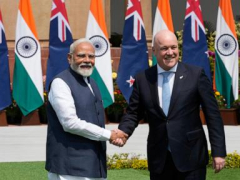

NEW DELHI — India and New Zealand announced Monday they have reached a free trade deal, seeking to deepen economic ties and shore up growth at a time of mounting global trade uncertainties.
The move comes as New Delhi accelerates efforts to diversify export destinations as part of a broader strategy to offset the impact of steep U.S. import tariffs.
A formal signing of the agreement between India and New Zealand is expected in the first quarter of next year after legal scrubbing of the negotiated text, India’s chief negotiator Petal Dhillon told reporters.
The India-New Zealand trade agreement, negotiated over nine months, aims to lower tariffs, ease regulatory barriers and expand cooperation across goods, services and investments.
It underscores India’s push to lock in trade partnerships beyond traditional markets as global commerce faces strains from unpredictable tariffs and geopolitical tensions, slowing growth and raising protectionism.
As part of the deal, India would get zero-duty-export access for all its goods to New Zealand while Wellington would get duty concessions and market access for about 70% of New Delhi’s tariff lines, covering 95% of its exports in a phased manner, Indian officials said.
India’s major sectors that will gain from tax free exports include textiles, apparel, engineering goods, leather and footwear, and marine products, while New Zealand’s major gains will be in horticulture, wood exports, coal, and sheep wool and meat, among others.
New Zealand has committed investments worth $20 billion in India over a period of 15 years as part of the agreement, India’s Trade Ministry said.
New Delhi has excluded from the deal dairy imports such as milk, cream, whey, yoghurt, and cheese, along with animal and vegetable products, including goat meat, onions and almonds, citing “domestic sensitivities.”
Bilateral trade between India and New Zealand remains modest compared with New Delhi’s bigger partners, but officials said the deal has strong growth potential. Two-way trade that includes merchandise goods and services stood at $2.4 billion in 2024, whic