

The exhilaration of the return of March Madness is matched only by the existential dread of trying to sort through a 68-team field to determine a single champion. After all, unpredictability is part of what makes the NCAA Tournament so much fun … that is, unless you’re in some sort of pool, that is, in which case avoiding all the upsets and buzzer-beaters that will bust your bracket can feel like navigating a minefield.
But we’re here with some good news: There’s actually a very good way to narrow down the list of teams capable of cutting down the nets in any given year. KenPom, the brain-child of college hoops number-cruncher extraordinaire Ken Pomeroy, is an invaluable resource for anybody looking to fill out a bracket, providing a complete statistical profile of every men’s Division I team — from pace to rebounding to shooting and everything in between. And in the entire history of the KenPom database — which stretches all the way back to the 1997 tourney — no team has managed to win a national title without clearing two very basic benchmarks.
- Top 40 in offensive efficiency
- Top 25 in defensive efficiency
Offensive and defensive efficiency may sound fancy, but they’re actually stupidly simple: It’s a measurement of how many points you score and how many points you give up per 100 possessions (in order to account for the affects of pace). And for 30 years, no team has won it all without finishing in the top 40 on offense and the top 25 on defense.
So what does that tell us about the 2026 tournament? Here’s everything to know to help you crown your bracket’s national champ.
Which March Madness teams are national title contenders, according to KenPom?
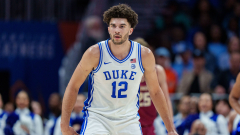
Entering Selection Sunday, only 11 teams meet that criteria. It’s a list that includes plenty of the usual suspects — including all four projected No. 1 seeds in Duke, Michigan, Arizona and Florida — but also some surprises.
|
Team |
Offensive efficiency rank |
Defensive efficiency rank |
|---|---|---|
|
Duke |
4 |
2 |
|
Michigan |
8 |
1 |
|
Arizona |
7 |
3 |
|
Florida |
9 |
6 |
|
Houston |
16 |
4 |
|
Iowa State |
22 |
5 |
|
UConn |
26 |
11 |
|
Michigan State |
24 |
12 |
|
Gonzaga |
30 |
9 |
|
Virginia |
28 |
16 |
|
Tennessee |
35 |
14 |
In addition to the big four, you also see all of Joe Lunardi’s projected No. 2 seeds in Houston, Iowa State, UConn and Michigan State. The final three teams that clear the bar, though, might not be the three you expect: Gonzaga, Virginia and Tennessee are projected as No. 3, No. 4 and No. 6 seeds, respectively, but all of them have been strong enough on offense while playing elite defense.
It’s worth noting that the profiles of the above 11 teams vary pretty widely; while Duke, Michigan, Arizona and Florida fall within the top 10 in both metrics, some teams (even popular Final Four contenders like UConn, Michigan State and Iowa State) are great defensively but just barely get over the bar on the other end of the court. That points to a potential weakness that could cut short their tourna