

MIAMI — The oil tanker was navigating near the coast of Guyana recently when its location transponder showed it starting to zigzag. It was a seemingly improbable maneuver and the latest digital clue that the ship, the Skipper, was trying to obscure its whereabouts and the valuable cargo stored inside its hull: tens of millions of dollars’ worth of illicit crude oil.
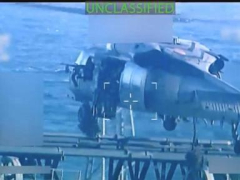
On Wednesday, U.S. commandos fast-roping from helicopters seized the 332-meter (1,090-feet) ship — not where it appeared to be navigating on ship tracking platforms but some 360 nautical miles to the northwest, near the coast of Venezuela.
The seizure marked a dramatic escalation in President Donald Trump’s campaign to pressure strongman Nicolás Maduro by cutting off access to oil revenues that have long been the lifeblood of Venezuela’s economy. It could also signal a broader U.S. campaign to clamp down on ships like the Skipper, which experts and U.S. officials say is part of a shadowy fleet of rusting oil tankers that smuggle oil for countries facing stiff sanctions, such as Venezuela, Russia and Iran.
“There are hundreds of flagless, stateless tankers that have been a lifeline for revenues, sanctioned oil revenues, for regimes like Maduro’s, Iran and for the Kremlin,” said Michelle Weise Bockmann, a senior analyst at Windward, a maritime intelligence firm that tracks such vessels. “They can no longer operate unchallenged.”
Since the first Trump administration imposed punishing oil sanctions on Venezuela in 2017, Maduro’s government has relied on scores of such oil tankers to smuggle their crude into global supply chains.
The ships cloak their locations by altering their automated identification system — a mandatory safety feature intended to help avoid collisions — to either go entirely dark or to “spoof” their location to appear to be navigating sometimes oceans away, under a false flag or with the fake registration information of another vessel.
The dark fleet expanded following U.S. sanctions on Russia over its 2022 invasion of Ukraine. Experts say many of the ships are barely seaworthy, operate without insurance and are registered to shell companies that help conceal their ownership.
The vessels often transfer their cargoes to other ships while at sea, further obscuring their origins, experts said.
For the most part, Maduro’s government has succeeded in using such tactics to get its oil to market. The country’s oil production has increased about 25% over the last two years, according to OPEC data. Still, Wednesday’s seizure could mark a turning point, experts said, foreshadowing a possible oil blockade that could deter smuggling from even some of the shipping industry’s worst actors
“The cost of doing business with Venezuela just went way up,” said Claire Jungman, director of maritime risk and intelligence at Vortexa, an oil analytics firm. “These are very risk-tolerant operators, but even they don’t want to lose a hull. A physical se