
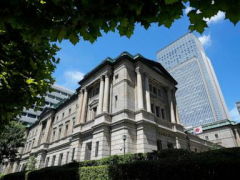

The Bank of Japan raised its key policy rate to a 30-year high on Friday to help curb inflation, as widely expected, and financial markets took the move in stride.
The 0.25 percentage point hike took the BOJ’s benchmark short-term rate to 0.75%, its highest level since September 1995. It will raise costs for mortgages and other loans, but also boost yields on savings deposits.
“It is highly likely that wages and prices will continue to rise moderately,” BOJ Gov. Kazuo Ueda told reporters. “Risks to the economy have diminished, but we must remain vigilant.”
Inflation has long remained above the BOJ’s target of about 2%. It was 3% in November, excluding volatile fresh food costs.
The 0.75% rate is still low by most standards, but the BOJ has kept that rate near or below zero for years, trying to pull the economy out of a deflationary funk. Since the pandemic, most other central banks, like the U.S. Federal Reserve, have raised rates to counter spiking inflation and then begun cutting them to help their slowing economies recover momentum.
Japan’s own economy contracted at a 2.3% annual rate in the last quarter, but improved business sentiment and price pressures have led the BOJ to relent and raise rates. Here are some things to know about its decision.
Since Japan’s economic bubble burst in the early 1990s, the central bank has kept borrowing costs low to encourage more spending by businesses and consumers.
Lower interest rates have also helped the central bank manage the country’s massive national debt, which amounts to nearly triple the size of the economy.
As Japan’s population has aged and begun declining, its economy has slowed and that led to deflation, or falling prices due to weak demand. Even with cheap credit, investment has lagged, stunting economic growth.
In early 2013, the central bank launched what was dubbed a “big bazooka” of monetary easing, cutting interest rates and purchasing government bonds and other securities to help channel more money into the economy. When the COVID-19 pandemic struck, the benchmark interest rate was at minus 0.1%. The BOJ only began raising it in 2024, the first hike in 17 years, after inflation stabilized above its ta