

Iran’s retaliation to the U.S.-Israel bombing campaign has focused heavily on its neighbors around the Persian Gulf, threatening their status as destinations for financial giants, billionaires, and wealthy tourists.
The area’s success at attracting capital from around the world over the years and diversifying away from oil could also make it a threat to global markets.
“Moved to Qatar to hide from taxes now I am hiding from Missiles,” a worker in the finance sector, who has been documenting the volleys of Iranian airstrikes from his balcony, quipped on X.
While the U.S. has military bases in the region that have also been targeted, analysts say Iran’s strategy is to inflict pain on America’s Mideast allies, including the United Arab Emirates, hoping they will pressure President Donald Trump to end combat operations.
Until then, however, social media is filling up with images of luxury hot spots literally on fire as Iran continues to lob missiles and drones at them.
An airstrike on Dubai’s Fairmont The Palm Hotel sparked a fire while also spreading panic on the famous Palm Jumeirah artificial island, where many of the city’s wealthiest residents live.
Smoke was also seen near the Burj Khalifa, the world’s tallest building, after a drone appeared to be intercepted and exploded. And in nearby Abu Dhabi, debris from another drone impacted the Etihad Towers. Kuwait City’s international airport was also attacked by a drone.
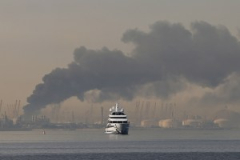
Meanwhile, DP World suspended operations at the Jebel Ali port—the largest container port in the Middle East and a key piece of Dubai’s economy—after a berth caught fire because of debris from an intercepted missile.
The port and adjacent free-trade zone account for 36% of Dubai’s GDP, and hundreds of ships near the Strait of Hormuz have frozen in place out of concern that Iran will close the vital chokepoint.
On top of that, the attacks from Iran have caused airspace to shut down aroun