
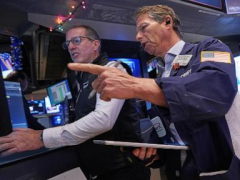

Asian shares were moderately higher and U.S. futures were mixed after the Bank of Japan raised its key policy rate Friday to its highest level in 30 years and U.S. inflation cooled more than expected.
The 0.25 percentage point increase by the BOJ was widely expected. It took the benchmark rate to 0.75%, the highest since 1995, but still low compared with other major economies.
In Tokyo, the Nikkei 225 gained 1% to 49,507.21, leading the rise across Asia’s key markets.
Following the BOJ’s decision, Japan’s benchmark 10-year government bond yield surpassed the 2% mark for the first time since May 2006. The U.S. dollar rose to 156.36 Japanese yen from 155.53 yen.
Global investors had been bracing for reactions to the BOJ’s move, but markets appeared to take the decision in stride. The future for the S&P 500 rose 0.1%, while that for the Dow Jones Industrial Average slipped 0.2%.
“The Bank of Japan’s decision to raise interest rates at its meeting today was clearly signaled ahead of time and therefore came as no surprise,” Abhijit Surya of Capital Economics said in a report, noting that “financial markets had almost fully priced in a hike ahead of today’s meeting.”
Hong Kong’s benchmark Hang Seng rose 0.8% to 25,713.56, while the Shanghai Composite index added 0.4% to 3,890.43.
In Seoul, the Kospi climbed 0.7% to 4,020.55.
Asia’s share gains were also built on optimism over more Fed rate cuts, after the U.S. on Thursday reported a lower-than-expected 2.7% rise in inflation for November, leaving potentially more room for the Fed to cut rates as the U.S. job market slows.
On Thursday, European indexes gained after the Bank of England cut its key interest rate and the European Central Bank kept its rate steady.
But Thursday’s U.S. inflation update may also not move the needle that much at the Fed given ho