
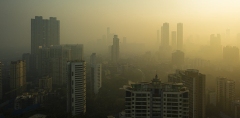

Cities are rapidly becoming the defining residential space of human life. Over 55% of the global population lived in urban areas in 2018, a proportion projected to reach nearly 68% by 2050, according to the United Nations (UN).
While this unprecedented urban growth fuels innovation and economic activity, it simultaneously concentrates human exposure to environmental stressors and intensifies urban environmental pressures. In this context, the World Health Organization (WHO) has underlined the multifaceted challenges and severe risks that poor air quality poses to socioeconomic activities and human health. And although emissions – such as NO₂, SO₂, CO₂ and O₃ – are the usual suspects when it comes to air quality degradation, our recent study highlights that atmospheric dust that accumulates over urban areas represents an additional and considerable, yet frequently overlooked, contributor to adverse health implications.
Mineral dust’s impact on Public health deserves more attention
Among the aerosol species contributing to air quality degradation, atmospheric dust originating from natural sources and anthropogenic activities is often considered less consequential. However, this assumption overlooks a growing body of research evidence reporting on airborne dust as a health hazard and neglects several important facts.
To begin with, dust is not a marginal component of the total aerosol load. By mass, dust is the second-most abundant aerosol type globally, surpassed only by sea-salt particles, and the dominant component of the atmospheric aerosol load over large continental areas.
More specifically, it has been estimated that natural sources – mainly arid and semi-arid areas – emit around 4,680 teragrams (Tg) (1 Tg= 1 billion kilograms) of dust into the atmosphere each year. Yet, this estimate does not account for all the dust present in the atmosphere.
Globally, natural processes contribute to approximately three quarters of the total dust load, with the remaining quarter linked to human activities frequently evolving around urban and highly industrialised areas, including transportation, infrastructure development, land-use change, deforestation, grazing and agricultural practices.
To put this into perspective, this staggering airborne dust mass exceeds 615,000 times the equivalent weight of the Eiffel tower released globally into the atmosphere each year.

Minsky/Shutterstock
Furthermore, these particles composing the atmospheric dust layers are far from uniform in size. Large-scale experiments, (designed to study atmospheric pollutants in detail) focusing on mineral dust and employing airborne in situ instrumentation have revealed that particles in wind-transported atmospheric layers range widely in size, from less than 0.1 μm (roughly the size of a SARS-CoV-2 virus (coronavirus) to more than 100 μm (approximately the diameter of a human hair).
More concerning is that accumulated evidence from epidemiological studies links airborne dust to multiple adverse health outcomes. While coarse mineral dust is often considered relatively harmless, typically causing minor skin irritation or allergic reactions even over long exposure periods, it is a completely different story when it comes to fine particles. Because of their small size, these fine particles allow for deep lung penetration that potentially triggers respiratory and cardiovascular diseases, allergic reactions, even cancer. Beyond these direct effects, scientists are still exploring the role of dust as a carrier for bacteria, as suggested by meningitis outbreaks in the Sahel desert.
Fine particles, big questions
These concerns naturally raise a series of questions: to what extent have the fine-mode and coarse-mode fractions of airborne dust changed over highly industrialised and densely populated urban areas in the past two decades?
Can we det