
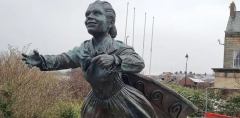

A newly unveiled statue in North Shields is casting fresh light on the extraordinary life of Mary Ann Macham – a woman whose courage carried her from the brutality of slavery in the US state of Virginia to freedom on the banks of the River Tyne on Christmas Day, 1831.
With the help of a friend in Virginia who was enslaved to the harbour master, Macham (who was enslaved on a plantation) hid beneath a tree and in the forest for six weeks while men on horses and bloodhounds searched for her. She was then smuggled to the harbour, where the second mate of a ship stowed her away with the cargo.
After many weeks at sea, including a stop in the Netherlands, Macham reached Grimsby. There she was taken by road to North Shields and welcomed by two “Miss Spences” on Christmas Day.
The Spence family were Quakers and committed abolitionists who offered her refuge and support. Macham’s story, dictated to members of the Spence family, was later published in the Christmas 1950 issue of Tynemouth Parish. Her powerful account survives today, with the original text available through the African Lives in Northern England website.
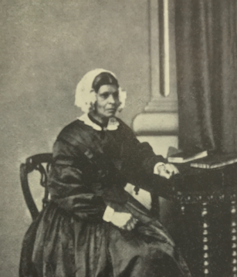
I Love North Shields
Macham lived in freedom in North Shields for the next 62 years. She worked in the Spence household and married a local man, James Blyth. Though her story is little known nationally, exhibitions about her have been held at the Old Low Light Museum in North Shields and the Discovery Museum in Newcastle. Local newspapers have told her story with pride and affection.
Macham’s story is an early example of a pattern which continued for most of the century, of Black American fugitives from slavery or anti-slavery activists coming to Britain and Ireland to work, lecture, publish and live.
Other figures such as Frederick Douglass, whose legal freedom was paid for by Quakers in Newcastle, and Moses Roper, who lectured far and wide, eventually settling for a time in Wales, are fairly well known. There are several possible explanations for why Macham’s story hasn’t had the same recognition.
First, there is still a distinct lack of attention paid to Black British history in general, particularly anything before Windrush, the ship that brought the first large group of Caribbean migrants to the UK in 1948. Second, Macham was not, as far as the records show, an abolitionist or anti-slavery activist in the traditional way of public lecturing, as Douglass was. She told her story knowing it would be shared, but otherwise it seems she used her freedom in Britain as simpl