
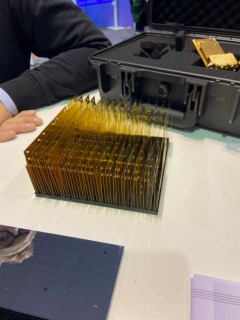

Quantware has solved the fanout problem for superconducting quantum computers. They are making breakthroughs that can scale quantum computers to millons of qubits by 2029.
They are at the Q2B silicon valley conference today at the Santa Clara convention center.
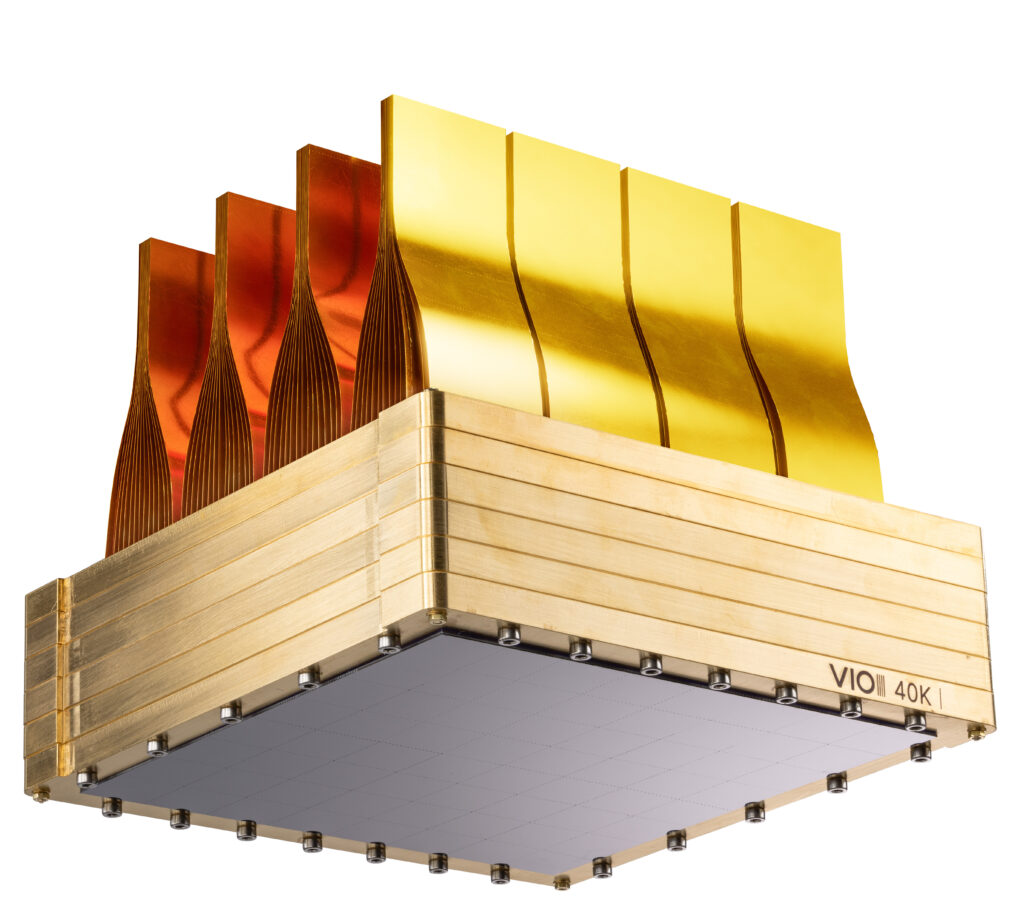
QuantWare announces VIO-40K, a new scaling architecture for quantum chips which solves the bottlenecks of scaling quantum computing, enabling 10,000 qubit quantum chips, 100x more qubits than current industry state-of-the-art from Google and IBM. It will be available in 2028.
VIO-40K architecture supports 40,000 input–output lines and consists entirely of chiplet modules connected to each other via ultra-high-fidelity chip-to-chip connections.
QuantWare’s architecture provides exponentially more compute per dollar and per watt compared to systems built out of many smaller QPUs connected over low-fidelity network connections – and it’s available to the entire industry so any organization working with superconducting qubits can now make more powerful QPUs.
In addition, QuantWare will open KiloFab in Delft, Netherlands in 2026 – an industrial-scale fab to manufacture VIO-40K chips at large. QuantWare is already the world’s largest commercial provider of quantum hardware by volume in the world today, Kilofab will increase its production capacity by 20x.
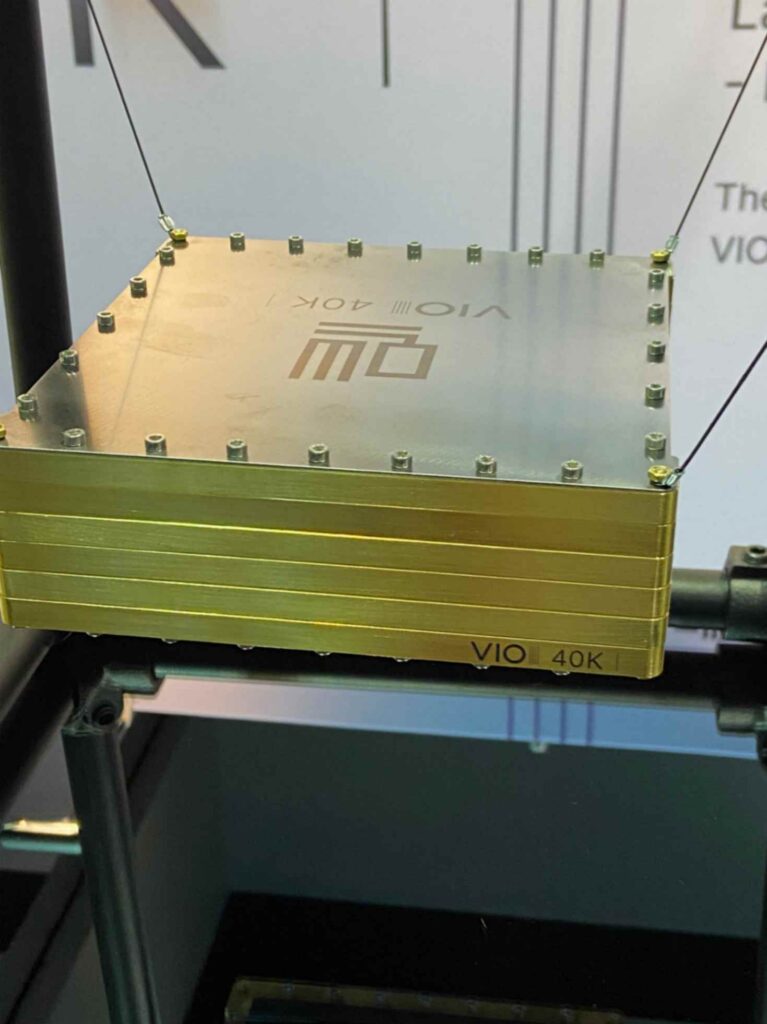
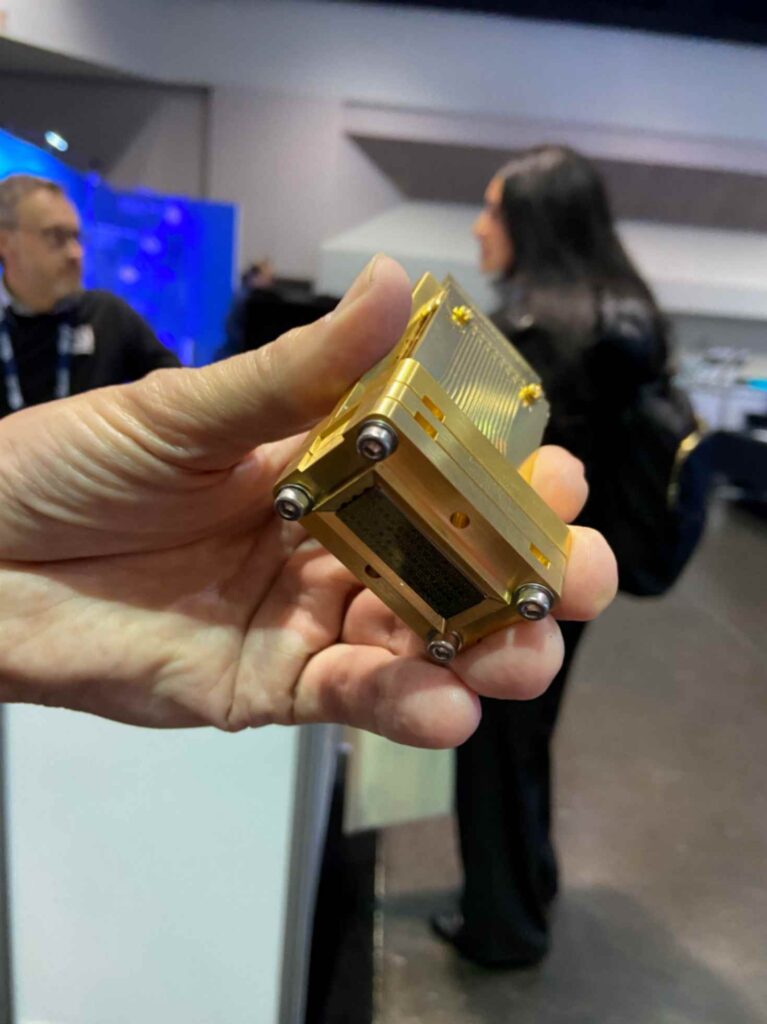
Here is the roadmap to 2028. In 2029, an array of 10X10 (100 units) will enable 1 million qubits with fast operations.
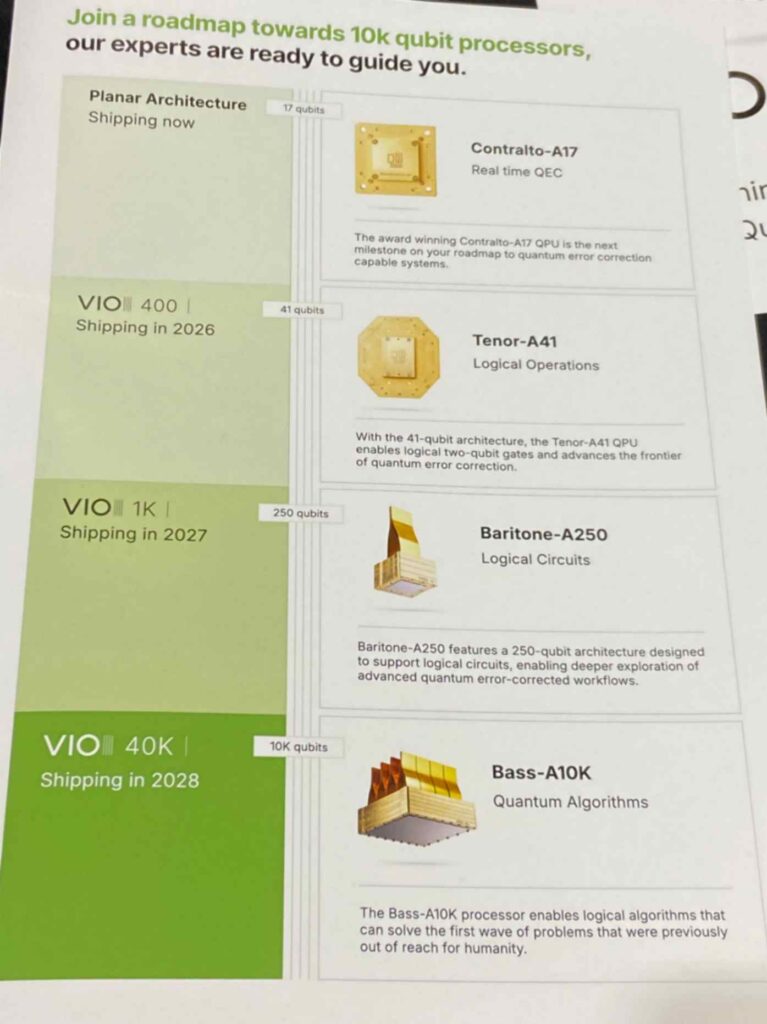
The system will work with ANY superconducting quantum computing system. They will be able to increase the density and scale them from hundreds of qubits to millions.
The array of chips is at the base of the networked units and the vertical components of input and output lines connected to further networking at the top of the units.
For almost a decade, the quantum industry has been stuck at maximum QPU sizes of about 100 qubits. Google’s quantum chips went from 53 to 105 qubits in six years, and IBM recently unveiled a 120-qubit QPU that will be the leading device size in 2028, according to its latest roadmap. This is due to scaling bottlenecks in the QPU hardware itself. This has forced the industry on a path to larger systems by networking many small processors, leading to prohibitively high total cost of ownership.
QuantWare’s VIO 3D scaling architecture solves the QPU scaling bottlenecks, unlocking very large QPUs for the first time. VIO-40K supports 40,000 input–output lines and consists entirely of chiplet modules connected to each other via ultra-high-fidelity chip-to-chip connections. This in return provides exponentially more compute per dollar and per wat