

Low-cost renewables provide an opportunity for tropical islands to drive a sustainable, secure and self-sufficient economy. Solar PV emerges as the bulk energy provider, driven by excellent resource conditions and fast-improving economic attractiveness. The anticipated momentum of solar PV in tropical islands can best be characterised as a Solar-to-X Economy.
LUT University
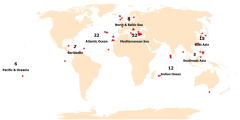
More than 740 million people live on islands that are well suited for renewable energy deployment. Yet many island nations remain highly vulnerable to climate change and dependent on costly fossil fuels, creating persistent macroeconomic pressures and reducing competitiveness.
A comprehensive review shows that highly renewable energy pathways are technically feasible and economically viable on islands. Nevertheless, research gaps remain. Many tropical islands are underrepresented, studies of fully renewable systems are limited, and multi-sector integration beyond the power sector is rare. Technology and resource assessments often overlook biomass sustainability, hydrogen, synthetic e-fuels, and ocean or geothermal energy, while environmental and social impacts are underexplored. Methodologies vary, and transition pathways beyond 60% renewable energy supply, including interconnection and alternative energy carriers, remain scarcely examined.
Against this backdrop, a series of studies from LUT University and its collaborators highlight pathways for islands across the Caribbean, Indian Ocean, and Pacific to achieve carbon neutrality by 2050. These studies emphasize high electrification, rapid renewable energy adoption, and the integration of advanced ocean-based energy technologies, including wave power, offshore wind power, and floating offshore solar PV systems. Together, these solutions provide a blueprint for a sustainable, secure, and low-carbon future for island communities.
Solutions for tropical islands worldwide
Steering highly renewable energy systems in tropical islands is possible, and variable energy resources, especially solar PV, will spearhead the transition. The anticipated solar energy momentum in tropical islands is driven by excellent resource conditions and rapidly improving economic competitiveness. Solar PV dominates the energy-industry landscape, accounting for 67-94% of total electricity generation, with wind contributing 6-30%, across the Caribbean. Comparable results are reported for the cases of Hawaiʻi, Indonesia, New Zealand, Maldives, Sri Lanka, Seychelles, Puerto Rico, and the Philippines.
Space limitations do not preclude tropical islands from achieving energy self-sufficiency and carbon neutrality. Offshore technologies provide a scalable pathway to a sustainable energy future while simultaneously strengthening the blue economy. A diversified portfolio of offshore renewable energy technologies, including floating offshore solar PV, offshore wind turbines, and wave power, may become essential for deep defossilisation of archipelago countries, as demonstrated by the cases of the Maldives, Hawaiʻi, and Seychelles. Wave power, while limited in the Maldives and Seychelles and showing higher potential in Moloka’i and Hawai’i, consistently enhances the diversity of island energy systems and complements solar PV- and wind power-dominated generation.
In New Zealand, as an example of a non-tropical island nation, wave power is less of a focus in cost-optimised energy system analyses, as the energy system can largely transition from a hydropower-centric to a solar PV-centric supply. Wave power could further diversify the energy mix at marginal additional cost to harvest one of the best wave energy resources in the world, with an excellent solar and wave energy resource complementarity over the year. Floating offshore solar PV has also been shown to be competitive with ocean thermal energy conversion in another study on the Maldives.
Solar-to-X Economy not only for land-locked countries
Solar-dominated, multigeneration energy-industry systems in tropical islands can effectively be described as a Solar-to-X Economy, in which low-cost solar PV electricity serves as the basis for a vibrant e-fuels, e-chemicals, and e-material industry. Low-cost renewable electricity and e-hydrogen form the cornerstone of a carbon-neutral energy system in tropica