

HONG KONG — By some measures, China’s economy is looking resilient, with strong exports and breakthroughs in artificial intelligence and other advanced technologies.
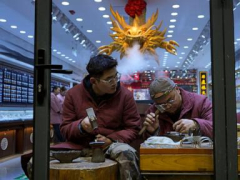
But that’s not how it feels for many ordinary Chinese, who have been enduring the strain from weak property prices and uncertainty over their jobs and incomes.
While some industries are thriving thanks to government support for technologies such as AI and electric vehicles, owners of small businesses report tough times as their customers cut back on spending.
Some economists believe that the world’s second largest economy is growing more slowly than official figures suggest, even though China may hit its official 2025 annual growth target of about 5%. Beijing has averted a damaging full blown trade war with Washington after President Donald Trump struck a truce with Chinese leader Xi Jinping, but many longer-term challenges remain.
Business is “very tough” right now as people don’t have much disposable income, said billiards hall owner Xiao Feng, who lives in Beijing.
“It seems the wealthy don’t have the time, and the ordinary folks don’t have money to spend,” said Xiao. “After deducting all costs, including rent, labor, utilities, I’m just breaking even.”
Xiao and his wife, a nurse, have a 10-year-old son. With her stable income, she is now the household’s breadwinner.
“Before, I used to contribute about 100,000 yuan (about $14,250) annually to the household,” said Xiao, who has cut his staff from eight to five as competition has intensified. “But I’ve had no income for about six consecutive months now.”
Beijing-based commercial property agent Zhang Xiaoze said he used to make up to 3 million yuan (nearly $428,000) a year during the peak years of the mid-2010s. Now he brings in about 100,000 yuan annually, and the the business environment is “extremely challenging,” he said.
“Demand is weak because many companies are relocating out of Beijing,” Zhang said, who is married with one child. “The fundamental issue is that people don’t have money.”
“There are times when I must dip into my savings to support the family,” he said.
China’s ruling Communist Party is promoting leader Xi’s push for “high-quality growth” and domestic innovation as it shifts investment and policies toward a consumption-driven growth model and high-tech industries.
During its rapid ascent as an export manufacturing superpower, China invested heavily in infrastructure such as railways, highways and ports, industrial zones and other property development. While boosting consumer spending and business investment are key priorities, exports remain a vital driver of employment and economic growth.
In the first 11 months of this year Chinese exports amounted to a record $3.4 trillion — with growing shipments to Southeast Asia and Europe helping to offset a sharp drop to the U.S. — versus imports of $2.3 trillion.
“China’s economy is amidst what I call a ‘Great Transition,’ as it moves away from the growth engines that drove growth the past three decades,” said Lynn Song, chief economist for Greater China at ING.
As is true in the U.S., in China the AI boom has helped drive gains in share prices. But the resources that have poured into the technology sector have not translated into a direct wealth effect for most people, said Song. “It is no surprise that many feel the situation on the ground is not reflecting the relatively more optimistic growth picture,” he said.
The divergence between the official economic growth figures and what many Chinese people are fee