
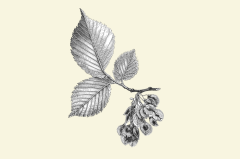

Slippery elm (Ulmus fulva/Ulmus rubra) bark is a traditional Native American remedy also known as red elm, Indian elm, moose elm and sweet elm. The slippery elm tree is native to eastern Canada and eastern and central US, where it’s found most commonly in the Appalachian Mountains. Historically, North American Indians and early settlers used the inner bark of the slippery elm as a poultice and healing drink. Early settlers boiled the powder with bear fat to prevent rancidity. The inner bark collected in spring is most often used, but the leaves also can be dried, ground into a powder and made into a tea.
Active ingredients
Slippery elm contains water-soluble polysaccharides, mucilage (gums), starches, nutrients (cell-wall associated minerals), antioxidants and tannins. It has a unique combination of water-soluble and water-insoluble fibre that on contact with water becomes mucilaginous (slimy or mucus-like). Slippery elm swells by 50–140 times its original size when mixed with water. It’s this property that confers its major health benefits. The astringent effects of the tannins, by “tightening” surfaces they contact, also provide an effective barrier to bacterial infection.
Actions
The therapeutic actions of slippery elm include demulcent, emollient, antitussive (relieves coughing), astringent, anti-inflammatory and nutritive.
Therapeutic uses
While most of the evidence for the use of slippery elm comes from traditional sources, internally it’s an excellent herb for the mucous membranes (demulcent action). When taken internally, it has a reflex stimulation of the nerve endings in the gastrointestinal tract, leading to increased mucus secretion of all inflamed surfaces, including the lungs and the urinary tract.
Digestive system
Slippery elm is a major herb for soothing inflammation of the membranes in the digestive system. This property covers multiple conditions. It neutralises stomach acids (eases reflux and heartburn) and is a metabolic waste remover (draws out impurities). The mucilaginous compounds coat and heal the mouth, the oesophagus and gastrointestinal tract. In the gastrointestinal tract, it reduces the inflammation of ulcers, particularly in the stomach and duodenum, and helps provide a barrier between the ulcer (membrane damage) and the stomach acid. Slippery elm soothes inflammatory bowel conditions such as inflammatory bowel disease, Crohn’s disease and ulcerative colitis. As a prebiotic, in the colon, it ferments to form the short-chain fatty acids such as butyric acid that feed the correct bowel bacteria: Lactobacilli and Bifidobacteria. Its property of absorbing water means it can function as a bowel normaliser, that is, it can relieve both constipation (bulks out the stool) and diarrhoea (solidifies loose stools). It has also been used traditionally to expel tapeworms. Slippery elm provides nutrients, particularly t