

After toppling Venezuela’s leader earlier this year, the Trump administration has turned its sights on Cuba. The near-total blockade of the island is now posing the greatest challenge to the government since the Cuban missile crisis in 1962.
Cuba is quickly running out of oil, creating a dire political and economic crisis for the island’s 11 million residents.
US President Donald Trump’s embargo has prevented any oil tankers from reaching the island for months. A ship carrying Russian fuel is now reportedly on the way to the island to attempt to break the blockade, but the US has seized other ships that have previously tried.
The Trump administration has also threatened tariffs on any nation that tries to send Cuba fuel, putting Latin American leaders in an uncomfortable position. Mexican President Claudia Sheinbaum has called out the embargo as “very unfair”, but she’s been careful not to antagonise Trump by putting an emphasis on the Cuban “people”, not the government.
This is not the first time the US has isolated Cuba, or coerced Latin American leaders to take part. Cuba has been under a US embargo for the past 66 years, which has stunted its economy and caused widespread human suffering.
The island has always found a way to get by, but can it survive this new round of American pressure?
Animosity grows in the 1950s
The Cuban Revolution caught the United States by surprise in 1959. During the Cold War, the US had supported dictatorships in Latin America, such as Cuba’s Fulgencio Batista, with political, financial and military support, creating widespread anti-US activism across the region.
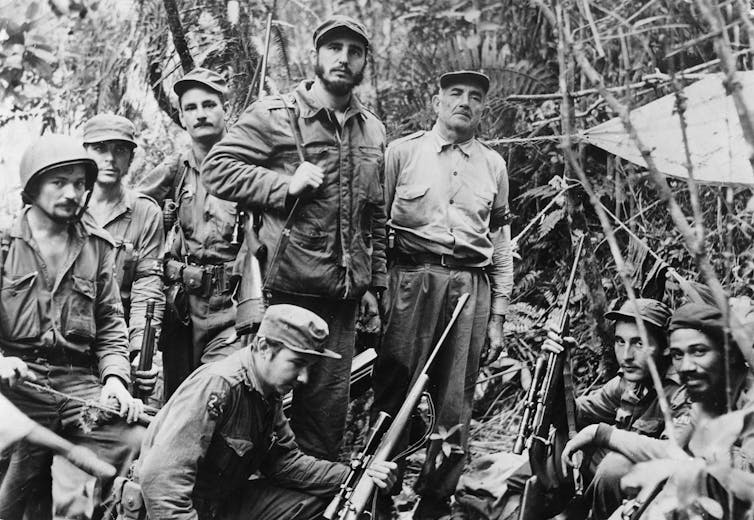
After coming to power, revolutionary leader Fidel Castro instituted modest reforms to land tenure and infrastructure to support the impoverished people. Then-US President Dwight Eisenhower opposed these moves because of their impact on US commercial interests on the island. This opposition turned into a US embargo of Cuban sugar imports in 1960.
Wikimedia Commons
In response, Castro looked to the Soviets as an export alternative. Eisenhower retaliated by refusing to ship oil to Cuba, leading Castro to sign an oil deal with the Soviets and eventually nationalise American and British refineries. In 1961, Castro declared his adherence to “Marxism-Leninism”.
Castro and Cuba were hugely popular throughout Latin America. When the Cuban military defeated the CIA-trained force of exiled Cuban fighters at the Bay of Pigs in 1961, Castro was lauded for standing up to the US, though few knew of the military and intelligence support coming from the Soviets.
And when President John F. Kennedy began the campaign to remove Cuba from the Organisation of American States (OAS) in 1961, most Latin American democracies moved to block it.
To bring those leaders to his side, Kennedy used a carrot-and-stick approach. He proposed an “alliance for progress” to meet the “basic needs of the [Latin] American people for homes, work and land, health and schools”. But his government also passed the Foreign Assistance Act, which established a total blockade of the island and prohibited US aid to any country providing assistance to Cuba.
The OAS removed Cuba as a member the following year and, in 1964, voted to embargo all trade to Cuba, except food and medicine.
Life under the embargo
The embargo prevented Cuba from reaching the modern technological age. Instead, it existed in socialist bubble, emphasising the care of its people over economic development.
Nonetheless, Cuba’s Cold War economic growth was comparable to its neighbours. In 1970, the nomina